
Journal
Natural Materials for Tropical Interiors
28 August 2026
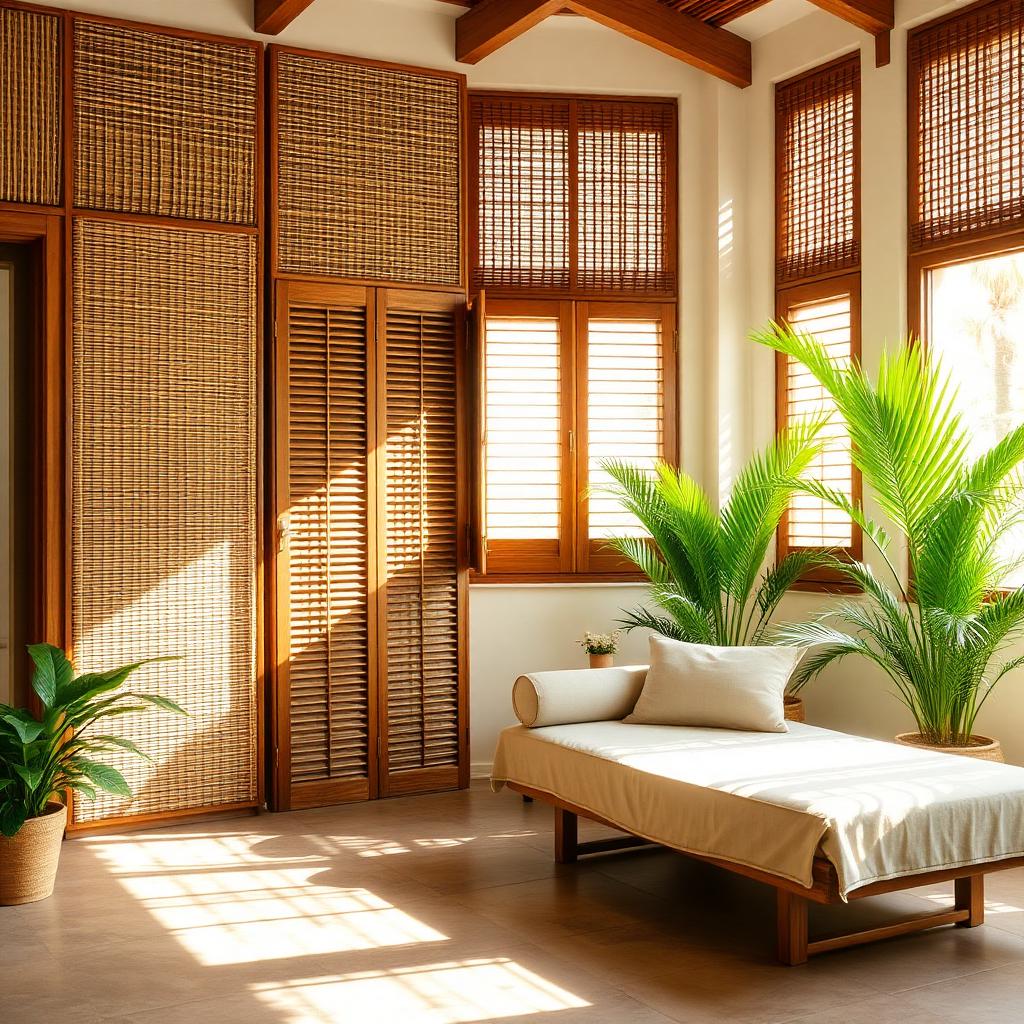
The tropics are unforgiving to dishonest materials. Laminate peels in humidity, synthetic fibres hold heat, and plated metals corrode in salt air. In a tropical interior, material selection is not an aesthetic preference — it is the decision that determines whether a space is still beautiful in five years.
Stone is the foundation. Volcanic stone and terrazzo stay cool underfoot, absorb the climate without protest and darken handsomely with use. We use them where the house meets the ground: floors, thresholds, bathrooms, and any surface that water and bare feet will find.
Timber must be chosen by species, not by colour. Teak earns its reputation because its natural oils resist humidity and insects; lesser woods need treatment that rarely lasts. Woven fibre — rattan, bamboo, water hyacinth — does the opposite job: it lets air move, filters light and softens rooms that stone and timber would otherwise make severe.
Textiles close the palette. Linen and cotton breathe where synthetics suffocate, and they relax into the climate rather than fighting it. The principle behind all of this is simple: in a tropical interior, every material should improve with weather and touch. If it only looks good on delivery day, it does not belong in the project.